It isn’t an entire week, but today was the first food shop of the month and the final weekend before The Bloke and I go back to work on Monday, so I am including my spend for the last three days as the first week of January as part of my No Spend January 2026 Challenge.
Points to note:
I am not including my mandatory expenses for the month (rent and bills) in my No Spend Challenge, So far already this month, I have paid off the last of the Council Tax for the year (the next annual bill will start again in April), my rent, and the TV license for January. I will put the money that I would normally spend on Council Tax into savings instead at the beginning of February and March.
The first two days of January were spent watching movies, sleeping, eating and tidying up as we were still in holiday mode, so there was nothing to tempt me to spend money on. I didn’t have to go anywhere or do anything, which isn’t representative of a normal week.
A No Spend challenge is choosing a specific period of time to spend as little money as possible, limiting purchases to just essentials such as bills and groceries. Some people try a no spend weekend or even a year, but I chose January because it is usually a quieter month socially and a good time to reset after Christmas and the New Year.
A weekly food shop from my No Spend Challenge in January 2022
January is the quietest month in terms of birthdays and events
I needed something to kickstart a frugal mindset that I hope will carry me through the rest of the year.
I set myself some rules for the month:
Money can (and should!) be spent on rent, bills and essentials like groceries, toiletries and petrol.
Money can be spent on parking should an activity be free. The reason why I am including this is that we have several press reviews at the theatre coming up over January, and while the tickets are complimentary we pay a few pounds for parking.
Should I need to go somewhere, I am allowed to spend money on bus fare, but not on a taxi unless it is an emergency (Note: I never learned to drive, hence why I am including this).
I am not allowed to spend money on non-essential items, including new clothes, books, takeaways, snacks, meals out, taxis, drinks at the pub etc.
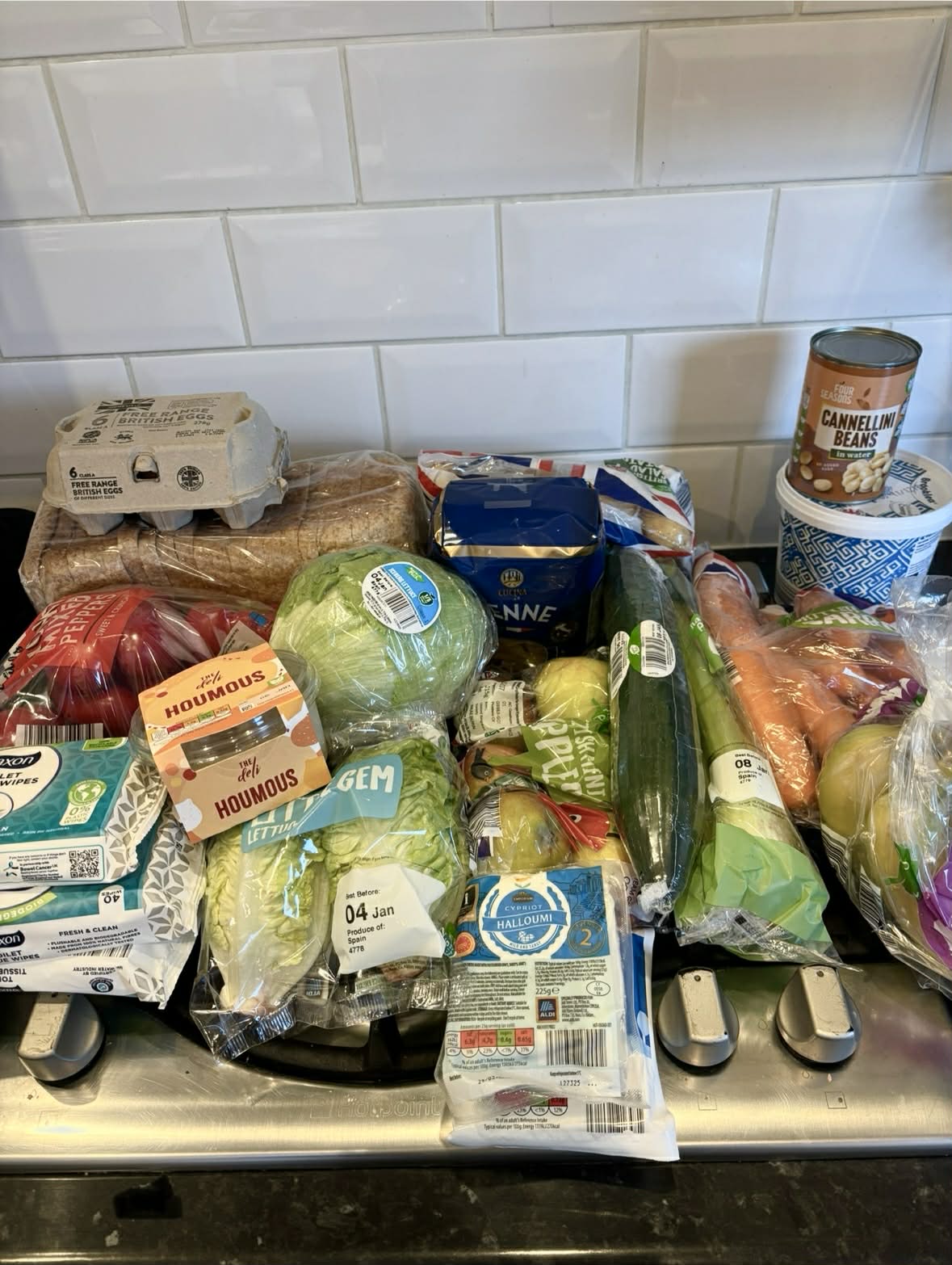
Week 1 was surprising. I figured that after the excess of Christmas the best way to cut back on spending was to start with food, and that’s exactly what I did. I spent £9.91 on groceries – mainly fresh fruit and veg – and combined that with the food left over in the cupboards, fridge and freezer. We had no takeaways, didn’t eat out anywhere and had no snacks at all. We also spent £10.50 on parking when we went to the theatre (we’re on the press team so the tickets were free), taking it to a grand total of £20.41. When looking at everything we would normally spend in a week, we saved about £111.
Week 2
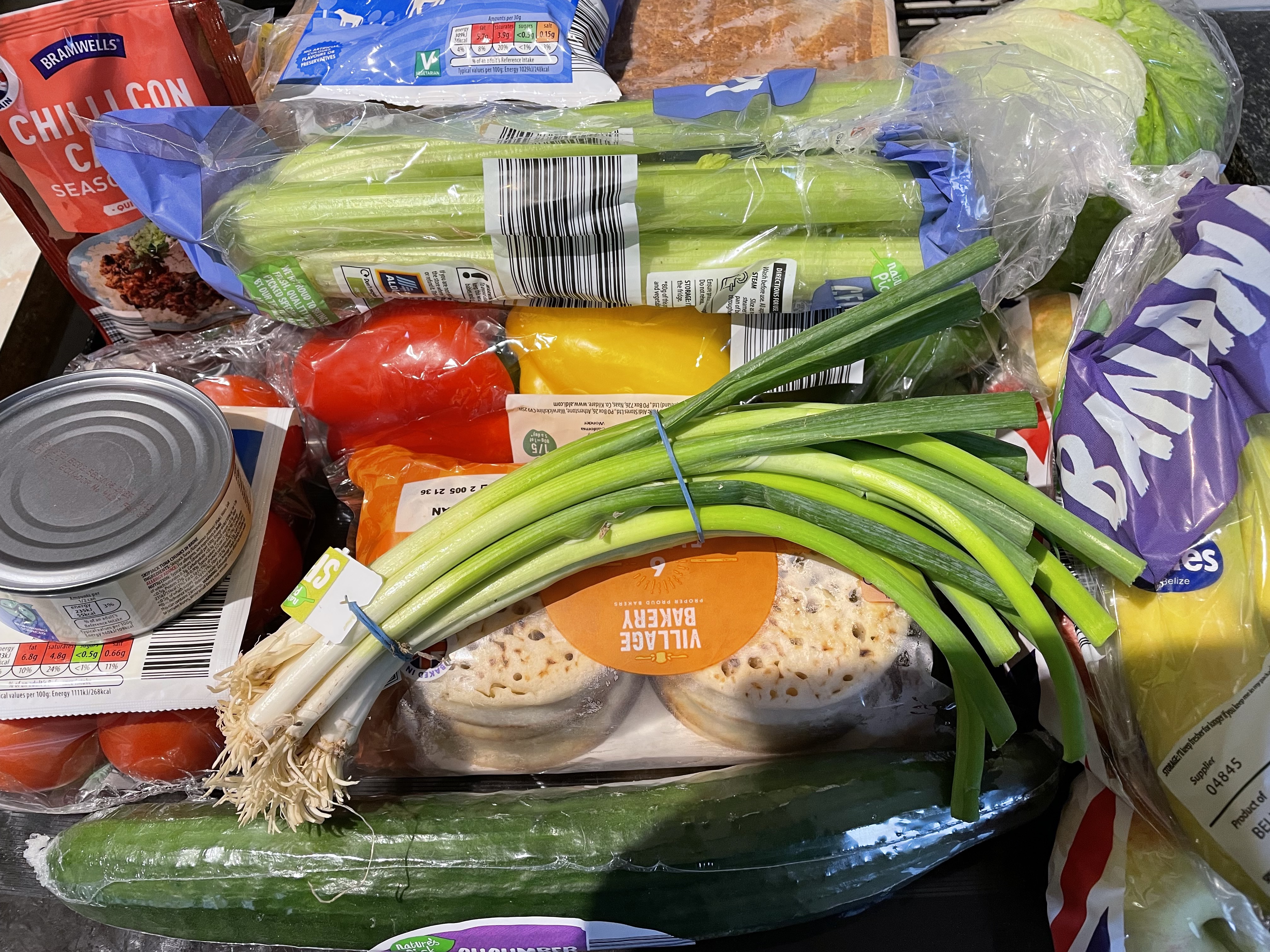
We continued into week 2 with the same criteria and mindset. I did a food shop again from Aldi, this time spending £8.25. We still had staples left over – potatoes, pasta, rice, frozen fish – and random boxes of frozen party food etc, so I followed the same pattern I had from the week before. I made three meals a day, utilised leftovers and got a little bit creative with some meals – who knew that vegetable samosas would go so well with homemade soup??
January is the quietest month in terms of birthdays and events
I needed something to kickstart a frugal mindset that I hope will carry me through the rest of the year.
I set myself some rules for the month:
Money can (and should!) be spent on rent, bills and essentials like groceries, toiletries and petrol.
Money can be spent on parking should an activity be free. The reason why I am including this is that we have several press reviews at the theatre coming up over January, and while the tickets are complimentary we pay a few pounds for parking.
Should I need to go somewhere, I am allowed to spend money on bus fare, but not on a taxi unless it is an emergency (Note: I never learned to drive, hence why I am including this).
I am not allowed to spend money on non-essential items, including new clothes, books, takeaways, snacks, meals out, taxis, drinks at the pub etc.
Before I started I was unsure of how much I spent each week. I don’t really buy much online except for the birthday and Christmas presents. Fashion isn’t my thing – I have a few nice outfits for when I go out but my wardrobe generally consists of hoodies and sweats. I do love my makeup but my last big purchase was a Pat McGrath palette a few months ago which will last me quite a while, and replacements of eyeliner and mascara were bought for me as Christmas presents. What on earth was I going to do a no spend challenge if it didn’t appear that I spent much money?
It turns out, I had very little idea about my spending habits.
A no spend challenge is setting a period of time to spend as little money as possible. In my case the no spend challenge is lasting for a month (the entirety of January), but no spend challenges can be followed for one day a week, a weekend, a whole week, fortnight, month or even a year.
There can be numerous reasons to start a no spend challenge:
To get back on track financially after a period of excess – Christmas, birthdays, holidays etc.
To stop impulse spending and being more mindful of where your hard-earned money goes
To kickstart your savings
To pay off debts
To change your mindset towards money and finances
To help break addictions (eg. smoking)
To avoid becoming overwhelmed by the rapidly increasing cost of living
Personally, I am primarily doing a no spend challenge to start really building up my savings, be more mindful of how and when I spend my money, and to stop impulse spending on things that are irrelevant and unnecessary for the lifestyle I want.



 Suzie Speaks
You must be logged in to post a comment.